
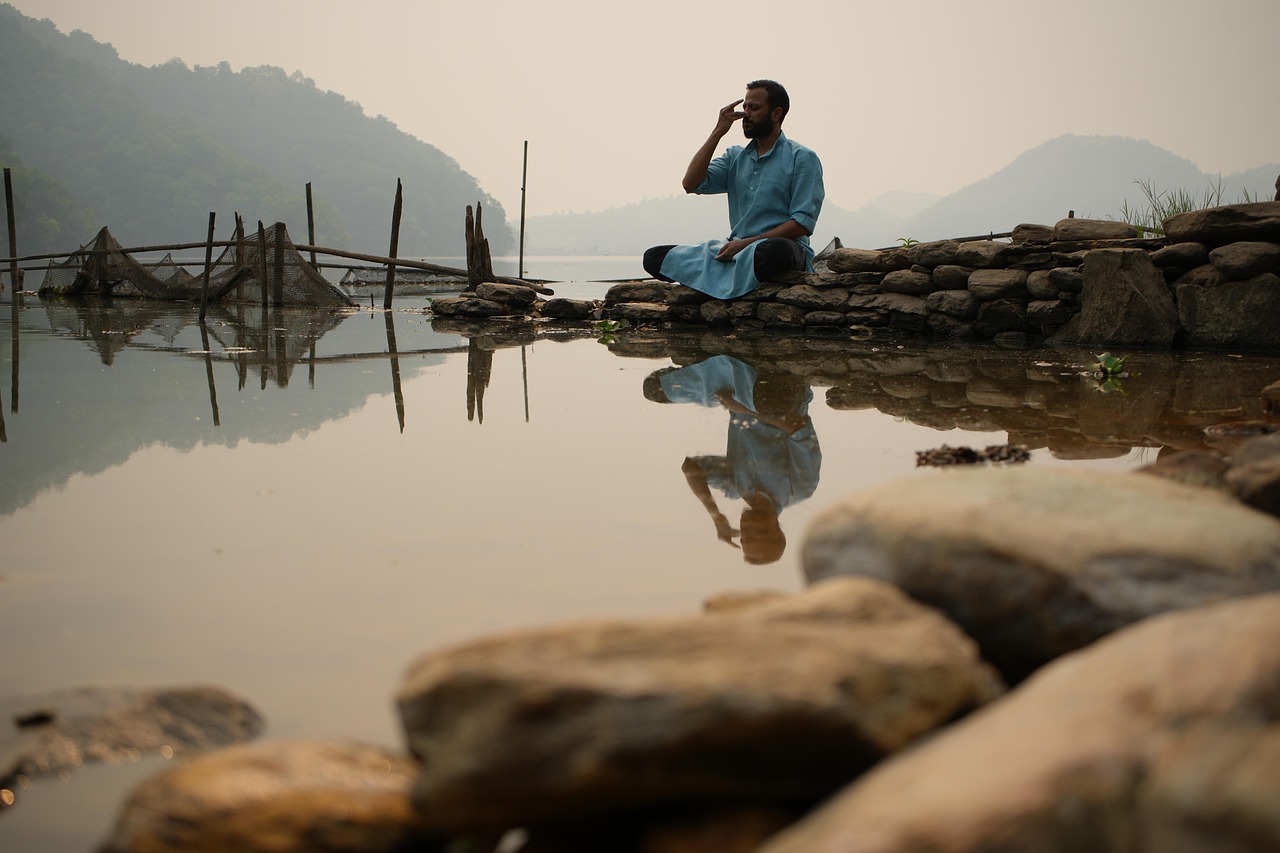
Prana is defined as the vitality or vital force or life force which is flowing as a primary essence of prakriti (nature). Prana flows through 72000 (84000 in some text) nadis (channels) into each and every cell of human body. It supplies energy relentlessly since birth to death. The study and practice of prana flow is called ‘Prana vidya’. It is also the flow of chitta or consciousness as described in chandyogyo Upanishad and yoga Sutra’s of Patanjali. In Buddhism, nurturing and taming prana body is the foundation of progress towards enlightenment. Kundalini shakti is stored in muladhara chakra as a potential prana shakti. Unlocking kundalini shakti and when it penetrate shatchakra through susumna and attain into Sahasradhara is the flow of purified prana shakti merge into shiva shakti.
Here, detail discussions on some pranayama:
Yogic Breathing : There is a need to practice yogic breathing thoroughly before attempting pranayama. Yogic breathing is full inhalation (Puraka) and smoothly merge into full exhalation (rechaka). Practice it for 10 to 20 repition. Keep your attention on samavritti (equal) and visamavritti (unequal) breathing practice. Samavritti is that –Inhalation and exhalation should be in same length of time period and visamavritti is that –inhalation and exhalation should be in 1;2 in ratio. Practice should be smooth and without any exhaustion.
Ujjayi Pranayama: (Victorious breath or Ocean Breath)
Sit in comfortable position in Padmasana or sukhasana or swastikasana. Pelvic floor is stable and well grounded, vertebral column is upright and naturally aligned with full awareness. First- aware of the natural flow of the breath and its rhythem. Then take a deep inhalation and expand abdomen, diaphragm, and chest in all direction. Don’t hold the breath if you are not practicing antara kumbhaka. Then smoothly migrate to exhale with khechari mudra and sonorous sound in the throat. First start with inhalation and exhalation with 1:1 ratio, then proceed to 1:2 or more advanced practice. After mastering the ujjayi pranayama, then introduce antara kumbhaka, then bahir kumbhaka, and in the final stage , ujjayi should be done with together with antara kumbhaka, bahir kumbhaka, and with moolabhadha, uddiyan bandha and jalandhara bandha. One doubt is that, should we make a sound while ujjayi exhalation or it should be silent. There is a both possibilities. While practicing for inner movement realization, do it silent, but when practice for vigorous force generation, the ujjayi exhalation become naturally powerful and sonorous sound. Ujjayi is the basic pranayama practice to integrate in yoga asana practice and progress into more subtleand advanced pranayama practice. It gives focus, improving respiratory capacity, cardiac endurance, balancing energy, awareness of breath and movement, generation of internal force, reduce stress and anxiety. Promote relaxation.
Nadi Shodhona : Cleaning the nadi’s or the channels of prana flow. It starts with sitting in comfortable sitting meditation posture like sukhasana, padmasana, swastikasana, siddhasana, and well grounded with pelvic floor and upright position of vertebral column. Practice start with thumb placed on right naso ala and index or ring finger on left naso ala. Inhale with left nostril while opening the left nostril and also exhale with left nostril while closing the right nostril. After five rounds, do the same with right nostril while closing the left nostril with ring finger. Do also practice for five round in right nostrils. Starts with samavritti (equal) with 5 secs inhalation and then 5 secs exhale. Practice for 3 to 5 mins and then do some yogic breathing. Practice for 10 to 15 days and then proceed to alternate nostrils Nadi shodhona practice. This is the first stage of Nadi shodhona practice and practice with samavritti (equal) inhalation and exhalation.
Nadi shodhona is a stage by stage practice. In the second stage of practice, it is alternate nostril pranayama. Do the same sitting position and finger position on the naso ala, inhale with left nostril and exhale with right nostril with samavritti and then inhale with right nostril and exhale with left nostril. Samavritti alternate nostril breathing will goes upto 24:24 secs of inhalation and exhalation ratio. After mastering samavritti, goes to visamavritti pranayama which starts with 1: 2 ratio as 5 secs inhale and 10 secs exhale. Add one secs everyday to inhala and exhale and goes upto 12:24 ratio. Afater these stage, we can start practice kumbhaka or breath retention. Practice alternate nostril pranayama each day 10 to 20 rounds. Finally do a few ujjayi pranayama.
Anuloma Pranayama: Anu means with the flow and loma means hair or interruption. When nadi shodhona practiced with interruption when inhalation it is stated as anuloma pranayama. It is starts with the same sitting position as other digital pranayama and the same figer positioning by the side of the nostrils. Then, when inhaling, break it for five times and each time for 2 secs and reach the pick of the puraka, with a smooth transition, close the left nostril and exhale through right nostrils. Do the same with right nostrils. When breaking the puraka, you can keep the nostril closed by pressing the ring finger or thumb. Practice 10 rounds and then do a few yogic breathing and rest in savasana.
Pratiloma Pranayama: Prati means against and loma means hair or interrupted. Pratiloma pranayama performed as inhalation done smoothly and completely and exhalation or rechaka with a interruption for 2 secs for 5 times break. This is also done the same way as anuloma only difference is that while exhalation, we do the interruptions for 5 times of 2 secs each time.
Viloma Pranayama: Viloma means inverted or contrary, but here it means interrupted. This pranayama done with digitally placing the fingers by the side of the nostrils and keeping little open of both nostrils while inhaling and totally closed while making the interruptions for 2 secs. Inhalation and exhalations- both is done by 2 secs of interruption for 5 times, but it is controlled by placing fingers by the side of the nostrils. We can perform antara kumbhaka and bahir kumbhaka while performing the interruptions.
We are going to discuss soon on many other pranayamas. They are as follows:
Amar (Immortality) pranayama, Smriti (Memory) Pranayama, Chidakasa (Consciousness) Pranayama, Earth elemental pranayama, Fire elemental pranayama, Gayatri nadisuddhi pranayama, Muladhara Pranayama, Visuddhi pranayama .
